
Detecting mold in indoor air is not as simple as identifying visible growth on walls.
In most real-world cases, mold is detected too late because people rely on visual cues rather than environmental indicators.
Professional mold detection is based on air quality trends, not isolated observations.
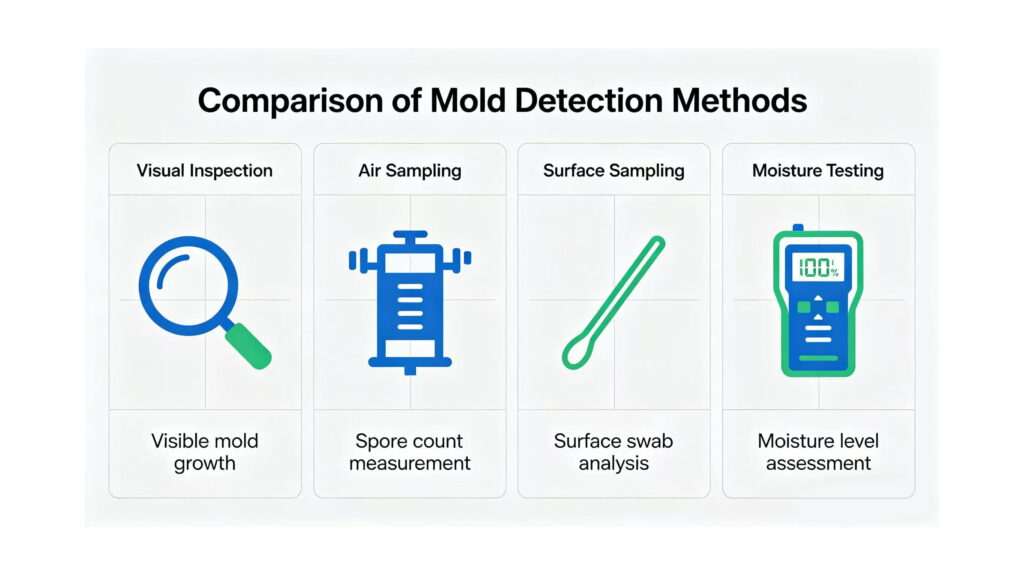
Mold Detection Methods Comparison (Expanded)
| Method | Accuracy | Speed | Cost | Notes |
|---|---|---|---|---|
| Visual inspection | Low | Fast | Free | Too late stage |
| Odor detection | Low | Fast | Free | Subjective |
| Air quality monitor | Medium–High | Real-time | Medium | Trend-based |
| Laboratory testing | Very High | Slow | High | Reactive |
Detecting mold risk is only the first step. To avoid serious damage, prevention is even more important. Read our complete guide here: how to prevent mold effectively
Scientific Indicators of Mold in Air
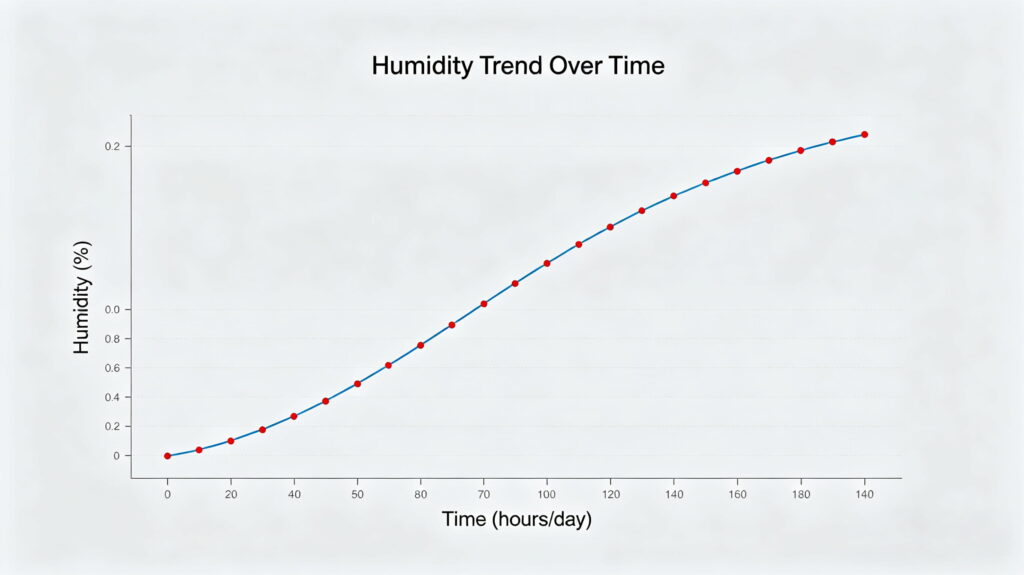
Humidity trend increase
Not a single value, but a rising pattern.
VOC spikes
Often early biological activity signal.
PM2.5 instability
Indicates airborne contamination variation.
Real-World Example Scenario
A typical indoor situation:
- Room humidity: 65–72% at night
- VOC levels: slight upward trend
- PM2.5: unstable fluctuations
No visible mold yet.
But risk level is already high.
Key Insight
Mold detection is not binary.
It is probabilistic.
You are not looking for “mold yes or no”.
You are looking for “mold likely or not likely”.
CTA
Continuous monitoring is the most reliable method for early mold detection.
If you are also looking for recommended devices, check this guide: best indoor air quality monitor for mold