
Most people only discover mold when it becomes visible on walls or when they start noticing a strange musty smell inside their home.
But in reality, mold growth usually begins long before that point.
It starts silently.
In the air.
In humidity changes.
In hidden corners of your home that you rarely check.
By the time you actually see mold, the environment has already been favorable for growth for days, weeks, or even months.
This is why indoor air quality monitoring has become a critical part of modern home maintenance—not just for comfort, but for prevention.
A good air quality monitor
does not directly “detect mold,” but it helps you identify the environmental conditions that lead to mold growth, allowing you to act before the problem escalates.
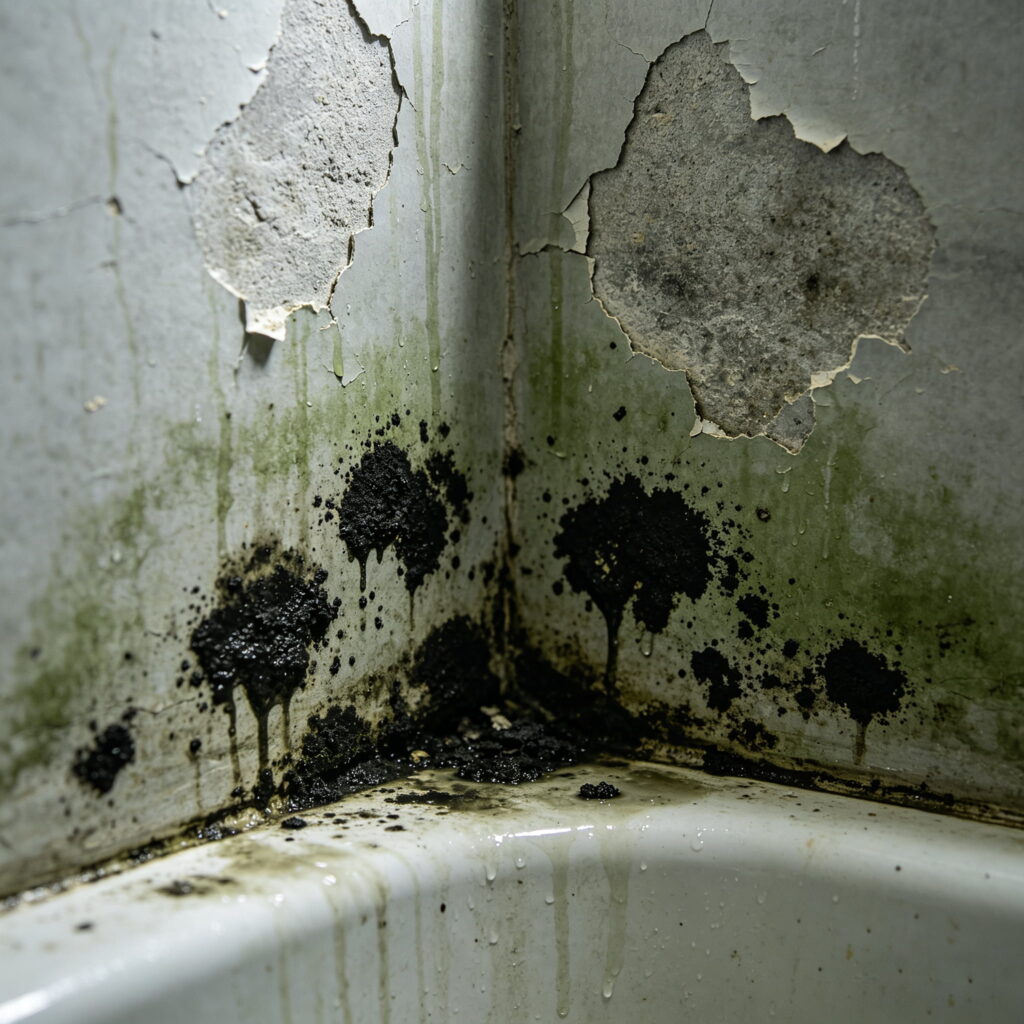
Why Mold is Difficult to Detect Early
Mold is not like dust or smoke. It does not appear suddenly in large visible quantities.
Instead, it grows in layers:
- Moisture appears
- Spores settle
- Growth begins microscopically
- Colonies expand
- Visible mold appears
The problem is that steps 1–3 are completely invisible.
Most mold problems happen behind:
- Drywall
- Bathroom tiles
- Ceiling insulation
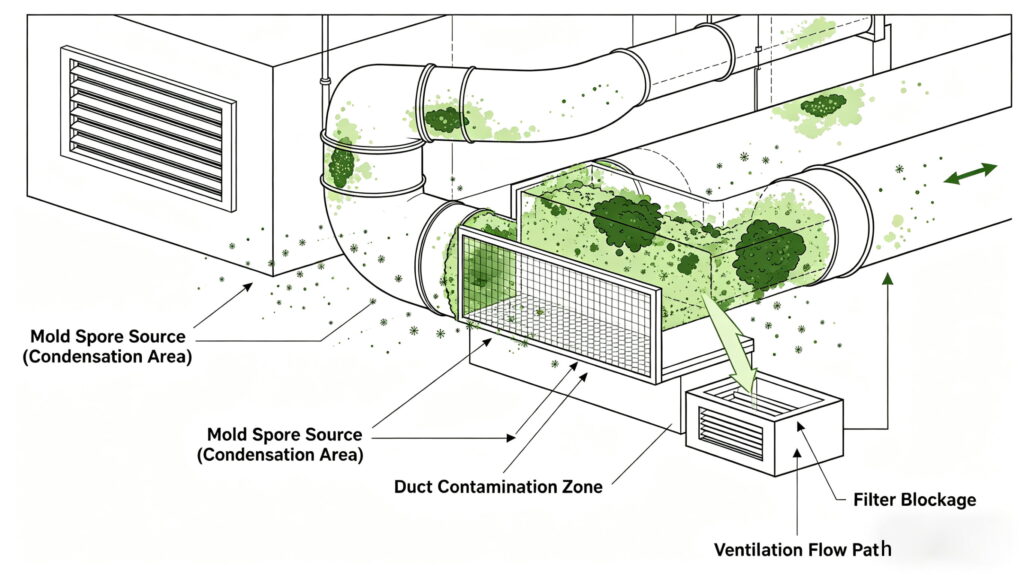
- HVAC ducts
- Wooden furniture backs
Even worse, mold spores are microscopic and easily travel through air circulation systems.
This means indoor air can already be contaminated before any visual signs appear.
Health Effects of Indoor Mold Exposure
Long-term exposure to mold spores may cause:
- Persistent coughing
- Allergic reactions
- Asthma flare-ups
- Headaches and fatigue
- Eye irritation
- Skin sensitivity
Some people are more sensitive than others, which is why mold problems often go unnoticed in households until multiple people start showing symptoms.
Can an Air Quality Monitor Detect Mold?
If you want to understand how professionals detect mold in indoor air, you can read this detailed guide: how to detect mold in indoor air
This is a common misunderstanding.
👉 Air quality monitors do NOT detect mold colonies directly.
However, they are extremely useful in detecting mold risk conditions, including:
✔ Humidity levels
RH>60%⇒High Mold Growth Probability
✔ PM2.5 / PM10 particles
These may include airborne mold spores.
✔ VOC concentration
Certain molds release volatile organic compounds during growth.
✔ Temperature + humidity combination
Warm + humid environments significantly accelerate mold formation.
What Makes a Good Mold Air Quality Monitor?
Not all devices are suitable for mold prevention.
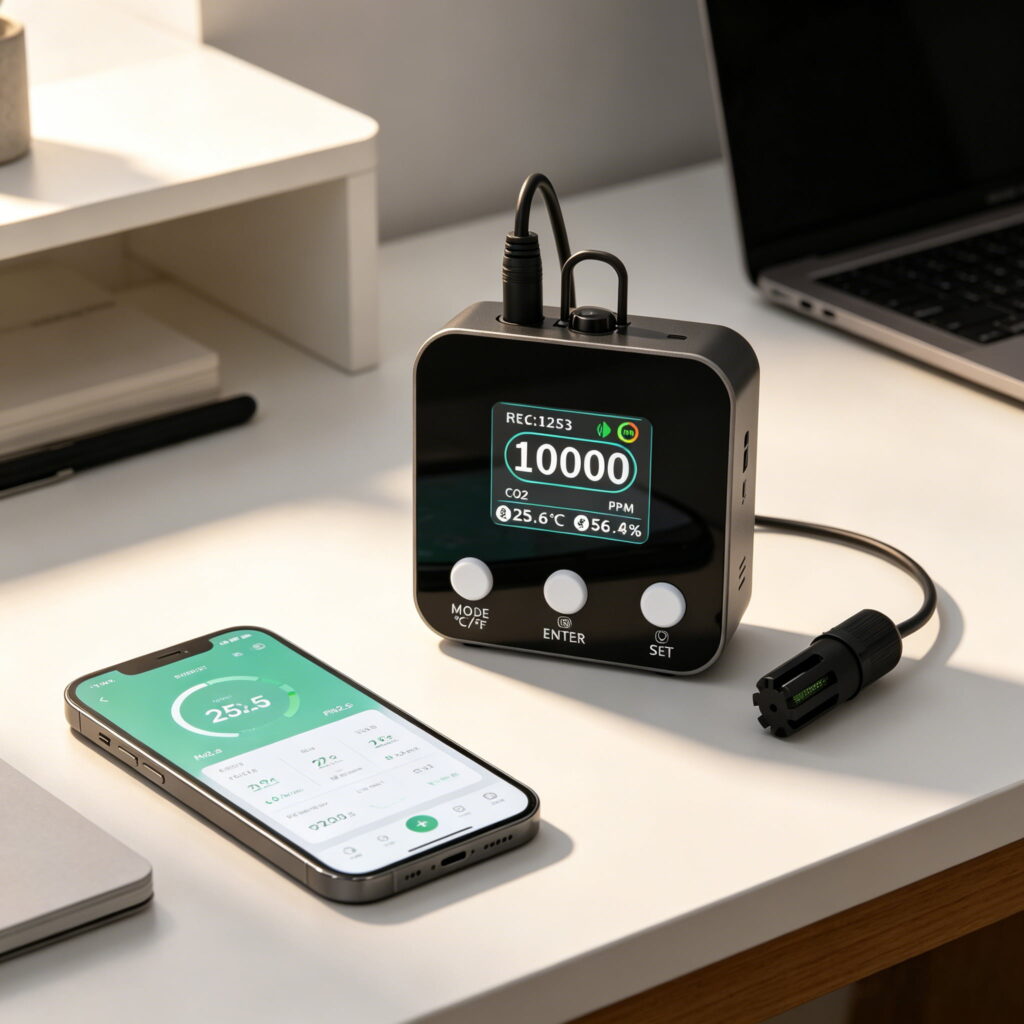
A professional-grade air quality monitor should include:
1.Real-time humidity tracking
Not delayed or averaged data, but live readings.
2.PM2.5 / PM10 detection
To track airborne particulate changes.
3.VOC sensor
To detect organic compound changes in indoor air.
4.Historical data tracking
Because mold risk is about trends, not single readings.
5.Smart alerts
Mobile notifications when risk thresholds are exceeded.
High-Risk Mold Areas in Homes
Mold is not evenly distributed in a house.
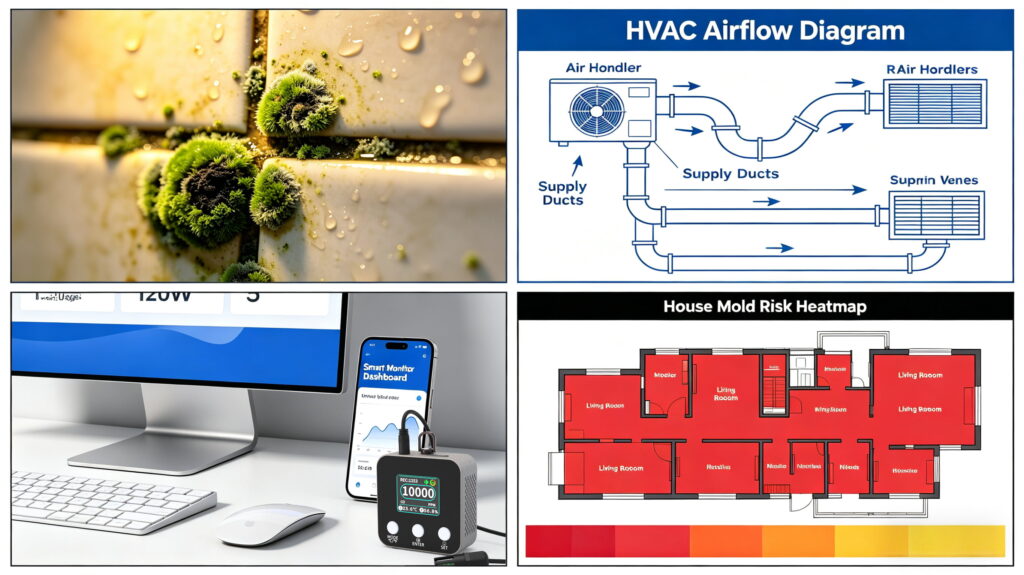
Common high-risk areas include:
- Bathroom (High humidity from showers and poor ventilation.)
- Basement(Low airflow + water seepage risk.)
- Bedroom(Nighttime humidity accumulation.)
- Kitchen(Steam from cooking activities.)
- HVAC systems(Hidden condensation inside ductwork.)
Common Mistake Homeowners Make
Most people react too late:
- ❌ Wait until mold is visible
- ❌ Wait until smell becomes strong
- ❌ Then hire remediation service
At this stage, mold is already established and spreading.
✔ Correct Prevention Strategy
Monitor → Detect humidity rise → Fix source → Prevent mold growth
This proactive approach is significantly more effective and cost-efficient.
Video Section
Embed video:
Search:
“how mold grows indoors animation HVAC system”
Learn More About Mold Detection
How to detect mold in indoor air
CTA
If you are sourcing professional air quality monitoring solutions for residential or commercial use:
👉 Contact us for OEM / ODM quotation.